What you will learn in this guide: What zinc barrel plating is and how it works, why construction materials are uniquely vulnerable to corrosion, which specific construction components benefit most from barrel plating, the key advantages of this finishing method over...
Blogs
Zinc Coating Thickness Standards: ASTM, ISO & What They Mean for Your Parts
If you’ve ever handed over a print to a zinc plater and seen a call-out like Fe/Zn 8 SC2 or ASTM B633 Fe/Zn 12 Type II, you know that zinc coating specifications can look like a foreign language. But those letters and numbers aren’t arbitrary — they...
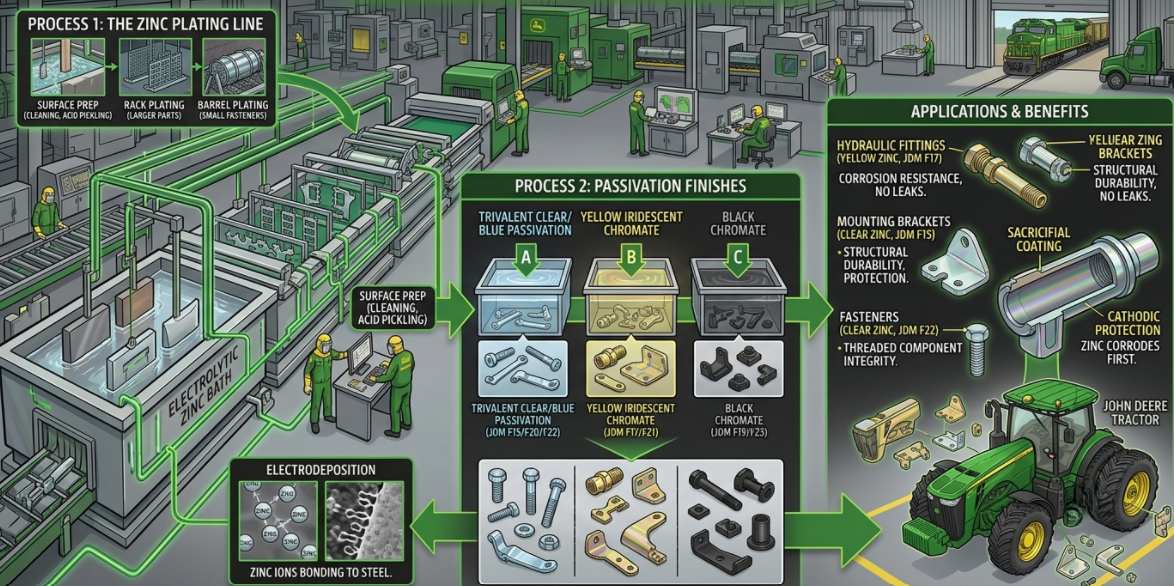
Zinc Passivation Colors Explained: Clear, Yellow, Black & Trivalent
The Color Is Not Just a Cosmetic Choice If you have ever held a zinc-plated bolt, bracket, or stamping and noticed that some parts look silvery-clear, others have a golden-yellow iridescence, and still others are a deep matte black — you may have assumed the color was...
Salt Spray Testing for Zinc Plated Parts: What the Results Mean
Introduction: You Got the Salt Spray Results. Now What? You specified zinc plating for your steel parts. Your plater ran them through a salt spray chamber. The test report came back with hours to white corrosion and hours to red corrosion. And now you are staring at a...
The Complete Mechanical Galvanizing Process: Step by Step
Corrosion never sleeps. Every bolt, bracket, and fastener exposed to moisture, salt, or industrial chemicals is in a constant battle against rust. For engineers who refuse to compromise on part integrity, one process rises above the rest: mechanical galvanizing. At...
The Complete Zinc Rack Electroplating Process: Step by Step
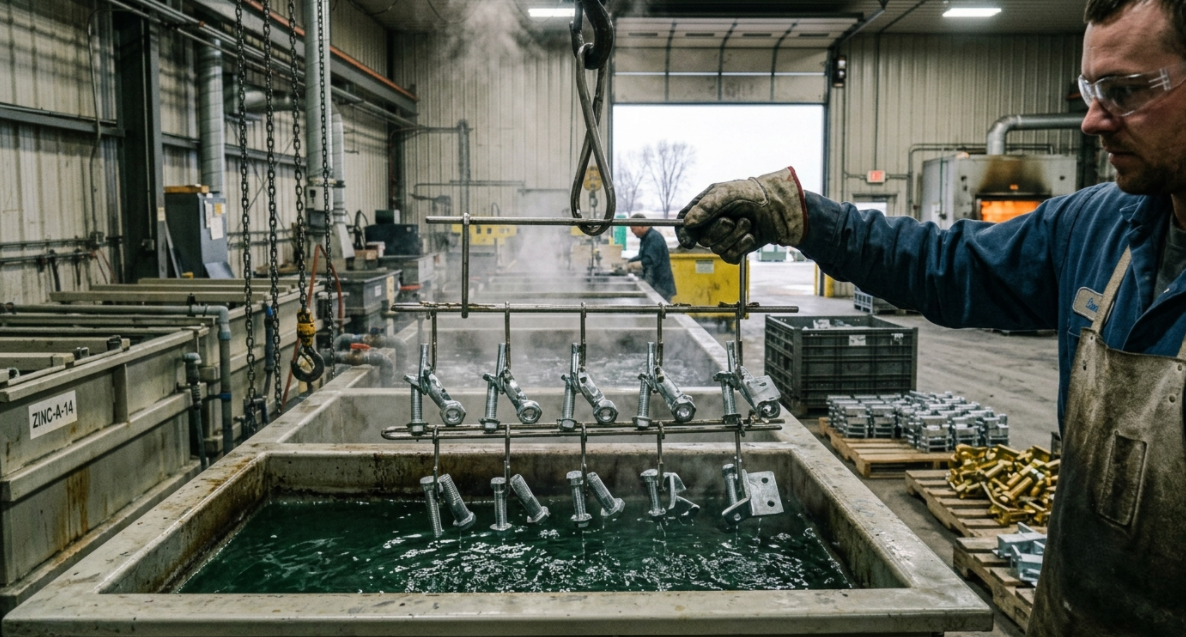
What Is Zinc Rack Electroplating Zinc rack electroplating is a highly controlled electrochemical process in which individual steel or iron components are mounted on specialized racks, immersed in a zinc-ion solution, and subjected to an electrical current that bonds a...
The Complete Zinc Barrel Electroplating Process: Step by Step
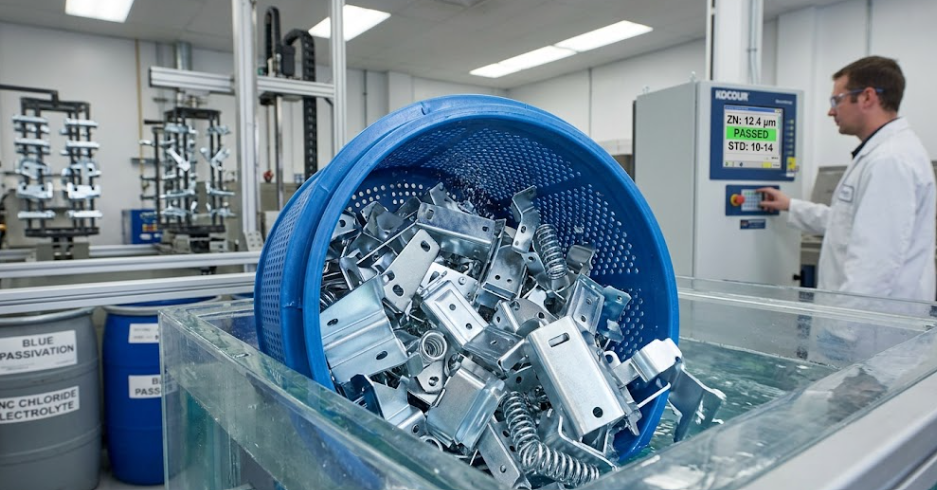
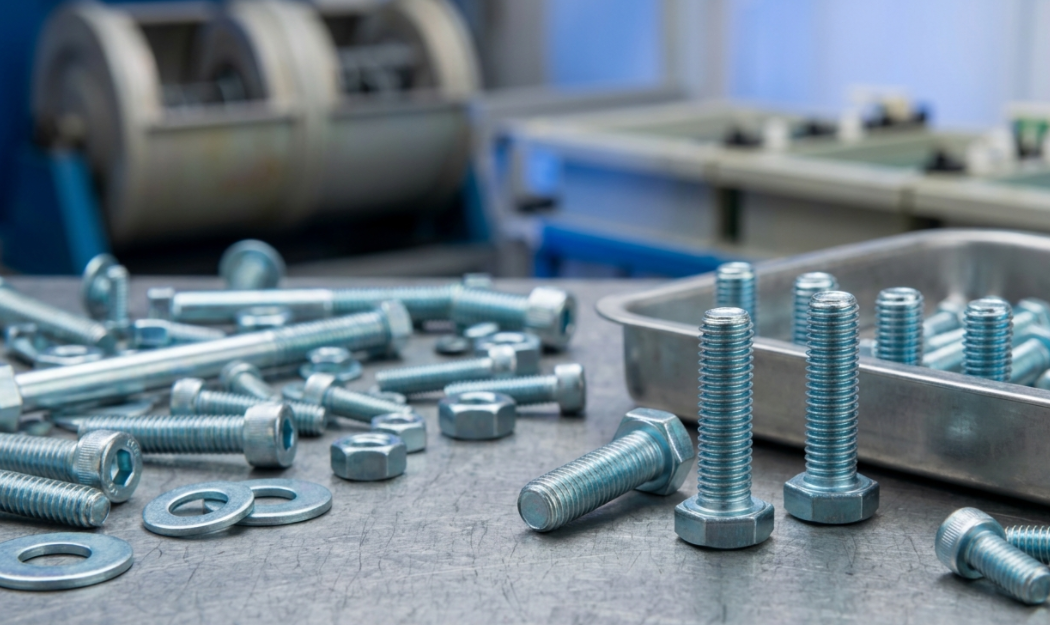
If your manufacturing operation produces high volumes of small steel components — fasteners, clips, brackets, stampings, or machine screws — there is a good chance that zinc barrel electroplating is either already part of your supply chain or should be. It is one of...
Zinc Plated Steel Components: Applications and Advantages
Why Steel Alone Is Never Enough Steel is the backbone of modern manufacturing. From the bolts holding your car’s engine together to the anchors keeping a bridge in place, steel components are everywhere. But here’s the problem: steel, on its own, is...
Zinc Plating for Hardware & Fasteners: A Material Guide
Hardware and fasteners are the connective tissue of manufactured products. Bolts hold engine blocks together. Screws anchor structural framing. Clips and stampings secure panels, housings, and assemblies in automotive systems, agricultural equipment, and industrial...
Zinc Plating for Industrial Machinery: A Practical Overview
Walk through any manufacturing facility and you will find steel parts everywhere — brackets, fasteners, shafts, housings, connectors, and structural hardware of every shape and size. What you will not always see is the thin but enormously consequential coating on many...
Zinc Plating for Automotive Parts: What Engineers Need to Know
When an automotive part fails in the field, the consequences extend far beyond a warranty claim. A corroded bracket, a seized fastener, or a degraded structural component can mean recalls, liability, and — most critically — safety risks. For engineers responsible for...
Top Industries That Use Zinc Plating and Why
In the world of industrial manufacturing, the battle against corrosion is never-ending. Moisture, oxygen, road salts, and chemical exposure are constantly working to break down steel and iron components. Left unprotected, these metals oxidize, forming rust that...