
In the world of industrial manufacturing, the battle against corrosion is never-ending. Moisture, oxygen, road salts, and chemical exposure are constantly working to break down steel and iron components. Left unprotected, these metals oxidize, forming rust that compromises structural integrity, ruins aesthetics, and leads to costly mechanical failures.
While there are many ways to protect metal painting, powder coating, or chrome plating one method stands out as the most versatile, cost-effective, and reliable Zinc Plating.
At Plateco, we have built our reputation on a singular focus. While other shops spread their expertise across a dozen different finishes, we specialize exclusively in zinc. This dedication allows us to provide a level of quality and consistency that multi-process shops simply cannot match.
In this guide, we will explore the science behind zinc plating, the top industries that rely on it, and the technical reasons why it remains the most sought-after finish in modern engineering.
What is Zinc Plating? (The Science of Sacrificial Protection)
To understand why so many industries choose zinc, you must understand how it works. Unlike paint, which acts merely as a “skin” or barrier, zinc plating provides sacrificial protection through a process called galvanic corrosion.
1. The Galvanic Reaction
Zinc is more chemically active than steel. When a zinc-plated part is exposed to corrosive elements, the zinc layer “sacrifices” itself. It corrodes first, creating a protective patina that shields the underlying steel. Even if the part is scratched and a small area of steel is exposed, the surrounding zinc will continue to protect that spot through an electrochemical reaction.
2. The Electroplating Process
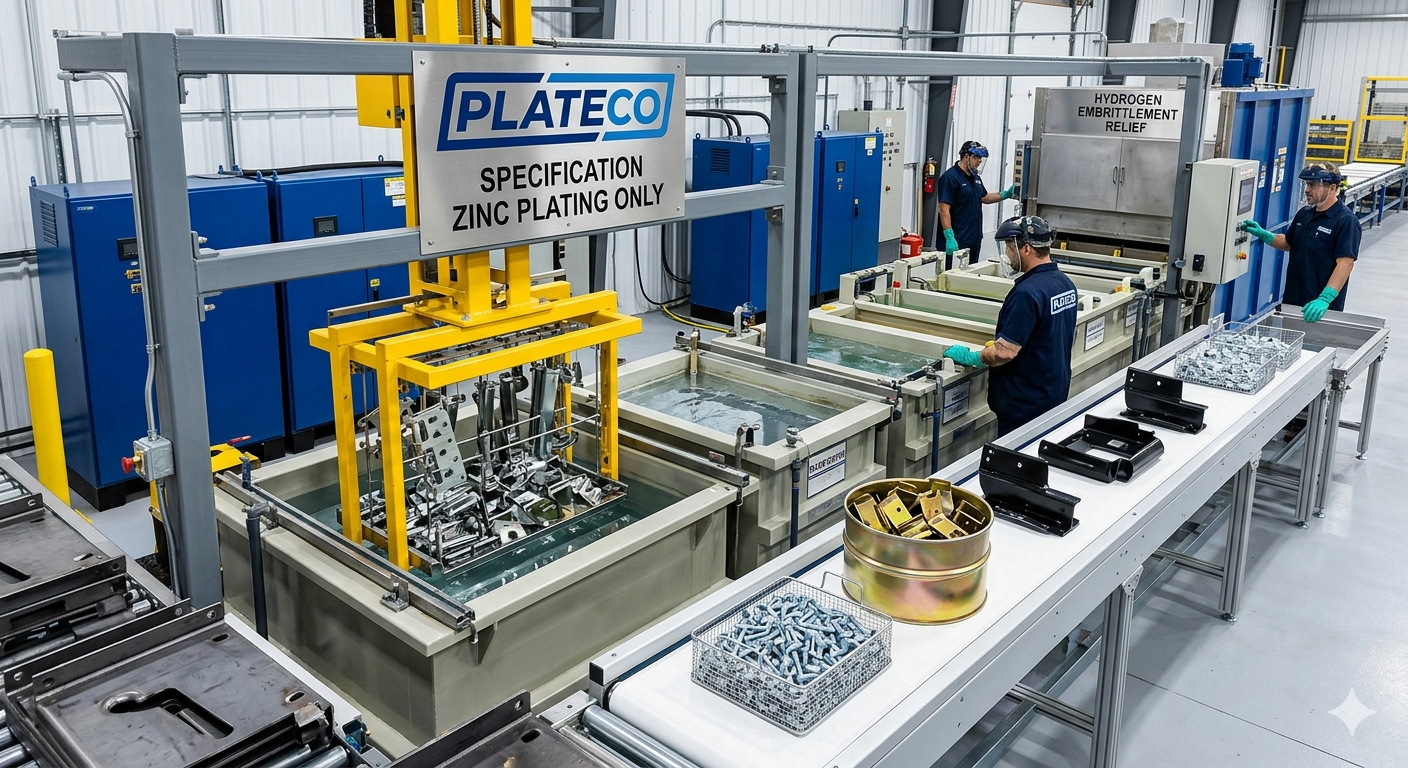
Zinc plating is an electrolytic process. Parts are submerged in a chemical bath containing dissolved zinc. An electric current is passed through the bath, causing the zinc ions to bond to the surface of the metal. This results in a uniform, thin, and highly adherent coating that doesn’t chip or peel like paint.
3. Passivation and Sealers
After the zinc is applied, it is usually treated with a chromate conversion coating (passivate). This adds another layer of protection and determines the color of the part:
- Clear/Blue: A silver-like finish often used for aesthetics and moderate protection.
- Yellow: Offers higher corrosion resistance, often used in automotive and industrial settings.
- Black: Used for aesthetics and high-end industrial applications.
Top Industries That Depend on Zinc Plating
Zinc plating is the “silent hero” of the global supply chain. If you look closely at the machinery around you, you will find zinc-plated components in almost every sector. Here is a deep dive into the top five industries that rely on this finish.
1. The Automotive Industry: Precision and Longevity
The automotive sector is the largest consumer of zinc-plated parts in the world. From the screws in your dashboard to the heavy-duty brackets in the chassis, zinc is everywhere.
Why the Automotive Industry Chooses Zinc:
- Corrosion Resistance Against Road Salt: In northern climates, cars are constantly sprayed with salt and de-icing chemicals. Zinc plating provides the essential barrier needed to prevent brake lines, fuel lines, and fasteners from rusting through.
- High-Volume Consistency: Automotive manufacturers require millions of identical parts. Plateco’s high-capacity barrel plating lines are designed specifically for this kind of volume, ensuring every single bolt meets the same rigorous salt-spray test standards.
- Dimensional Accuracy: Unlike hot-dip galvanizing, which creates a thick, uneven coat, zinc electroplating is incredibly thin (typically measured in microns). This allows automotive engineers to maintain tight tolerances on threaded fasteners and engine components.
Common Automotive Applications:
- Brake Systems: Calipers, clips, and fluid lines.
- Engine Components: Brackets, pulleys, and sensors.
- Interior Hardware: Seat belt mechanisms, seat tracks, and door latches.
2. Construction and Infrastructure: Building the Future
Construction hardware must survive the test of time and the fury of the elements. Whether it’s a bridge, a commercial skyscraper, or a residential home, the fasteners holding it together are likely zinc-plated.
Why the Construction Industry Chooses Zinc:
- Ductility: Construction parts are often under immense stress and vibration. Zinc plating is ductile, meaning it can bend and flex with the metal without cracking. This is a massive advantage over brittle coatings like ceramic or certain paints.
- Aesthetic Options: For visible hardware, architects often request specific passivates. Clear zinc provides a clean, modern look, while yellow zinc offers a “gold” appearance that fits traditional styles.
- Environmental Stability: Zinc-plated parts perform exceptionally well in outdoor environments, resisting the “white rust” that occurs in high-humidity areas.
Common Construction Applications:
- Structural Fasteners: Heavy-duty bolts, nuts, and washers used in steel framing.
- Electrical Conduits: Protecting the piping that carries wiring through buildings.
- Roofing and Siding Screws: Ensuring the “envelope” of the building remains secure for decades.
3. Agricultural Equipment: Toughness for the Heartland
Farming equipment faces some of the harshest conditions on Earth. Machines are stored outdoors, driven through mud, and exposed to highly corrosive fertilizers and pesticides.
Why the Agricultural Industry Chooses Zinc:
- Chemical Resistance: Modern fertilizers contain nitrogen and potassium, which are incredibly aggressive toward bare steel. Zinc plating, combined with high-performance sealers, provides a chemical shield that extends the life of the machinery.
- Abrasion Resistance: Farming involves friction soil rubbing against metal. Zinc’s bond to the steel is molecular, making it much harder to “scrub off” than a layer of paint.
- Cost-Efficiency for Large Parts: Tractors and harvesters are massive. Plating the thousands of small components that hold these machines together is far more cost-effective than using stainless steel.
Common Agricultural Applications:
- Irrigation Systems: Valves, couplings, and pipe connectors.
- Tillage Tools: Hardware for plows and seeders.
- Livestock Equipment: Gates, latches, and feeding systems.
4. The Electrical and Electronics Sector: Conductivity and Safety
In electrical engineering, corrosion isn’t just a maintenance issue it’s a safety hazard. Rust can increase electrical resistance, leading to overheating and fires.
Why the Electrical Industry Chooses Zinc:
- Electrical Conductivity: While zinc is a protective coating, it remains conductive. This makes it ideal for grounding lugs, connectors, and switchgear where electrical flow is required.
- Solderability: Many electrical components need to be soldered during assembly. Specific zinc plating processes can enhance the “wetting” of solder, ensuring a permanent, secure connection.
- EMI/RFI Shielding: Zinc-plated enclosures can help shield sensitive electronics from electromagnetic interference.
Common Electrical Applications:
- Switchgear and Transformers: Internal brackets and fasteners.
- Grounding Equipment: Lugs, rods, and clamps.
- Enclosures: Metal boxes that house circuit breakers and control panels.
5. Industrial Machinery and Power Tools
The machines that build our world conveyors, forklifts, hydraulic presses, and hand tools require components that can withstand constant use and industrial oils.
Why Industrial Manufacturers Choose Zinc:
- Hydrogen Embrittlement Relief: High-strength industrial bolts are susceptible to hydrogen embrittlement during the plating process, which can cause them to snap under a load. Plateco specializes in post-plate baking, a process that removes hydrogen and ensures the structural integrity of high-grade steel.
- Lubricity: Zinc plating has a naturally low coefficient of friction. This “lubricity” helps bolts reach their proper torque tension without galling or seizing.
- Ease of Identification: Using different passivates (Clear vs. Yellow) helps assembly line workers quickly distinguish between different types of bolts or parts, reducing errors in manufacturing.
The Plateco Difference: Why “Zinc Only” Matters
At Plateco, we believe that being a “Jack of all trades” leads to being a master of none. By focusing exclusively on zinc plating, we have optimized our facility to solve the most common problems in the industry.
1. Our 7-Stage Cleaning Process
Most plating failures happen because the part wasn’t clean to begin with. We utilize a proprietary 7-stage cleaning cycle that removes oils, scales, and oxides at a microscopic level. This ensures a bond that will not peel or flake.
2. Rack vs. Barrel Plating Expertise
- Rack Plating: For large, heavy, or delicate parts that cannot be tumbled. Each part is hand-wired to a rack for maximum precision.
- Barrel Plating: For high-volume fasteners and small parts. We use state-of-the-art rotating barrels to ensure 100% coverage on every single piece.
3. The “On Spec, On Time” Promise
We know that your production line stops if our trucks are late. We offer 48-hour quoting and some of the fastest turnaround times in the Midwest. Our philosophy is simple: we deliver exactly what we promised, exactly when we promised it.
4. Commitment to Sustainability
Modern zinc plating is much safer for the environment than the processes of the past. We utilize Trivalent Chromium (Cr3+) passivates, which are RoHS compliant and much more eco-friendly than the older Hexavalent (Cr6+) methods, without sacrificing corrosion resistance.
Is Zinc Plating Right for Your Project?
If your industry requires a finish that is durable, aesthetically pleasing, and cost-effective, zinc plating is almost certainly the answer. From the smallest electronic connector to the largest agricultural harvester, zinc provides the sacrificial protection necessary to keep the world running smoothly.
When you choose a plating partner, don’t settle for a generalist. Choose a specialist who understands the nuances of chemistry, the importance of hydrogen relief, and the necessity of a 7-stage clean.
Ready to protect your components?
Visit Plateco.net to learn more about our processes, or contact us today for a quote. Let’s build something that lasts.
Summary Table: Comparison of Finishes
| Industry | Primary Need | Recommended Zinc Finish |
| Automotive | Salt resistance & precision | Yellow Zinc with High-Level Sealer |
| Construction | Aesthetics & durability | Clear or Black Zinc Passivate |
| Agricultural | Chemical resistance | Yellow Zinc with Thick-Film Passivate |
| Electrical | Conductivity & safety | Clear Zinc (RoHS Compliant) |
| Heavy Machinery | Strength & torque | Zinc Plating with Hydrogen Relief Baking |