
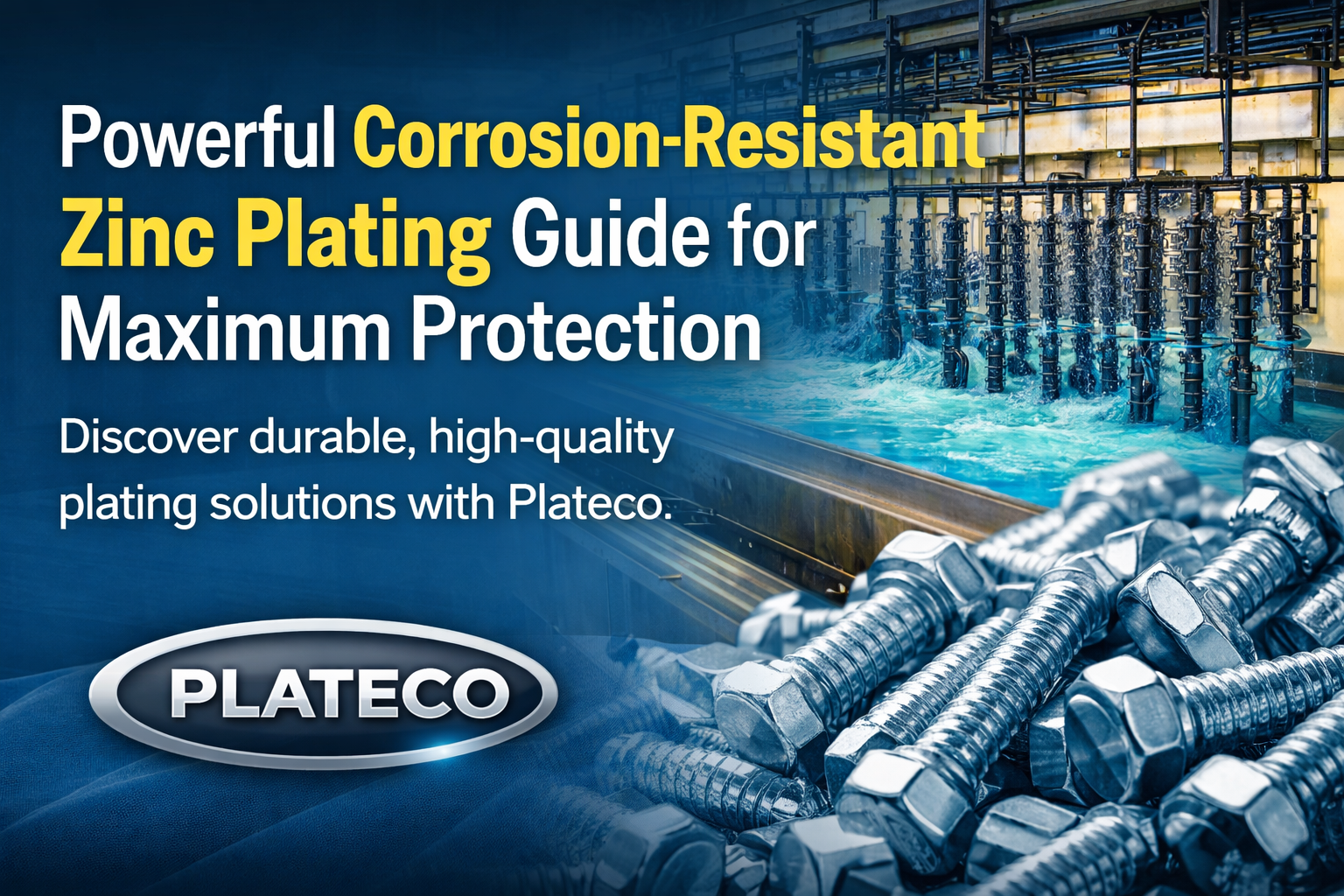
Corrosion is one of the biggest threats to metal components across industries. From automotive fasteners to industrial machinery, exposure to moisture, chemicals, and environmental conditions can quickly degrade unprotected steel. That’s where corrosion-resistant zinc plating comes in.
This article is designed as, meaning it introduces the concept, explains how it works, and helps businesses understand why it’s essential—while reflecting the quality-driven approach used by specialists like Plateco.
What Is Corrosion-Resistant Zinc Plating?
Corrosion-resistant zinc plating is a metal finishing process where a layer of zinc is applied to steel or iron components to protect them from rust and deterioration. This is typically achieved through electroplating, where zinc ions are deposited onto the surface using an electrical current.
The result is a thin but highly effective coating that acts as a protective shield against environmental damage.
Zinc plating is widely known as a corrosion prevention workhorse due to its ability to resist oxidation and extend the life of metal parts.
Why Corrosion Resistance Matters in Modern Manufacturing
Corrosion doesn’t just affect appearance—it directly impacts:
- Structural integrity
- Product lifespan
- Safety and reliability
- Maintenance and replacement costs
Without proper protection, steel components can fail prematurely, leading to costly downtime and repairs.
Corrosion-resistant coatings like zinc plating are essential because they:
- Prevent moisture from reaching the base metal
- Slow down oxidation
- Extend product life significantly
In many cases, zinc plating can increase the lifespan of components by years depending on environmental conditions.
How Zinc Provides Corrosion Resistance
The effectiveness of zinc plating comes from its unique ability to act as a sacrificial coating.
Sacrificial Protection Explained
Zinc protects steel through a process known as galvanic protection.
Zinc corrodes before steel
- It “sacrifices” itself to protect the base metal
- Protection continues even if the coating is scratched
This means that even when the surface is damaged, the zinc continues to defend the underlying material—something many other coatings cannot do.
The Multi-Layer System Behind Corrosion Resistance
High-performance zinc plating is not just a single layer—it often involves a multi-layer protection system.
According to industry best practices followed by companies like Plateco, corrosion-resistant zinc plating can include:
1. Zinc Layer
The primary protective layer that shields the steel and provides sacrificial protection.
2. Passivate Layer
A chemical coating applied over zinc to protect it from early oxidation and extend corrosion resistance.
3. Sealer or Topcoat
An optional final layer that enhances durability and resistance in harsh environments.
This layered approach significantly improves performance and longevity, especially in demanding industrial applications.
The Zinc Plating Process: How It Works
Understanding the process helps explain why quality matters so much.
1. Cleaning and Surface Preparation
This is the most critical step. Parts must be cleaned thoroughly to remove:
- Oils and grease
- Dirt and debris
- Oxides and residues
Poor cleaning leads to poor adhesion and reduced corrosion resistance.
2. Electroplating
The cleaned parts are submerged in a zinc solution, and an electrical current is applied:
- Zinc ions bond to the metal surface
- A uniform coating forms
This process ensures consistent coverage across complex shapes and geometries.
3. Post-Treatment for Corrosion Resistance
To enhance performance, additional treatments are applied:
- Passivation coatings
- Sealers or protective topcoats
These treatments are essential for achieving higher corrosion resistance, especially in demanding environments.
4. Hydrogen Embrittlement Relief
During plating, hydrogen may enter the metal, causing brittleness—a condition known as hydrogen embrittlement.
To prevent failure:
- Parts are baked in controlled conditions
- Hydrogen is released from the metal
This step is critical for high-strength components used in automotive and industrial applications.
Types of Corrosion-Resistant Zinc Plating
Different methods are used depending on part size, complexity, and application.
Barrel Electroplating
- Ideal for small parts like bolts and fasteners
- Cost-effective for high-volume production
Rack Electroplating
- Used for large or delicate components
- Provides superior finish and uniformity
Mechanical Galvanizing
- Applies thicker coatings
- Offers strong corrosion resistance without electrical current
Each method has its own advantages, but all rely on proper execution for optimal results.
Key Benefits of Corrosion-Resistant Zinc Plating
Zinc plating remains one of the most popular corrosion protection methods for several reasons.
1. Excellent Corrosion Protection
Zinc acts as both a barrier and sacrificial layer, preventing rust even in harsh conditions.
2. Cost-Effective Solution
Compared to alternatives, zinc plating delivers strong protection at a lower cost.
3. Extended Product Lifespan
Zinc coatings significantly improve durability and reduce replacement frequency.
4. Versatility Across Applications
Suitable for a wide range of industries and component types.
5. Smooth and Functional Finish
Zinc plating enhances appearance while maintaining performance.
Industries That Depend on Corrosion-Resistant Zinc Plating
Zinc plating is essential across multiple industries where durability and reliability are critical.
Automotive Industry
Used for fasteners, brackets, and engine components.
Construction and Infrastructure
Protects structural bolts and anchors.
Industrial Equipment
Ensures durability of machinery parts and tools.
Aerospace and Defense
Provides corrosion resistance for precision components.
Its ability to protect steel while maintaining mechanical integrity makes it indispensable.
Why Quality Control Is Critical
Not all zinc plating delivers the same level of corrosion resistance. The final result depends heavily on:
- Surface preparation quality
- Coating thickness
- Post-treatment processes
- Process consistency
Zinc plating is a highly technical process, and poor execution can lead to:
- Uneven coatings
- Reduced protection
- Premature failure
Companies like Plateco emphasize precision, advanced systems, and strict quality control to ensure consistent results.
Common Challenges in Achieving Corrosion Resistance
Despite its effectiveness, zinc plating comes with challenges that must be managed carefully.
1. Inadequate Cleaning
Contaminants can prevent proper adhesion.
2. Insufficient Coating Thickness
Thin coatings may not provide enough protection.
3. Lack of Post-Treatment
Without passivation or sealing, zinc may degrade faster.
4. Environmental Exposure
Moisture, salt, and chemicals can accelerate corrosion if coatings are not optimized.
Addressing these challenges requires expertise and attention to detail.
Zinc Plating vs Other Corrosion Protection Methods
Understanding alternatives helps highlight the value of zinc plating.
| Method | Corrosion Protection | Cost | Finish |
| Zinc Plating | High (with passivation) | Low | Smooth |
| Galvanizing | Very high | Medium | Rough |
| Powder Coating | Moderate | Medium | Decorative |
| Stainless Steel | High | High | Natural |
Zinc plating offers a strong balance of performance, cost, and versatility, making it a preferred solution in many industries.
The Role of Passivation in Corrosion Resistance
Passivation is a critical step in enhancing zinc plating performance.
- Protects the zinc layer from early oxidation
- Extends corrosion resistance
- Improves durability
Without passivation, zinc coatings may degrade more quickly, especially in harsh environments. This is why high-quality plating providers carefully apply post-treatment systems based on application needs.
Choosing the Right Zinc Plating Partner
Selecting the right plating provider is essential for achieving reliable results.
A trusted partner should offer:
- Specialized expertise in zinc plating
- Advanced cleaning and preparation systems
- Consistent quality control
- Strong technical support
Working with an experienced provider ensures components meet performance expectations and industry standards.
The Future of Corrosion-Resistant Zinc Plating
As industries evolve, zinc plating continues to improve through innovation.
Key developments include:
- Environmentally friendly passivation systems
- Increased automation and precision
- Enhanced coating technologies
- Greater focus on sustainability
These advancements are helping manufacturers achieve higher performance while reducing environmental impact.
Why Corrosion-Resistant Zinc Plating Is Essential for Modern Industry
Corrosion-resistant zinc plating is more than just a finishing process—it is a critical factor in product durability and reliability.
By combining:
- Sacrificial protection
- Multi-layer coating systems
- Precise process control
Zinc plating delivers long-lasting protection that helps industries reduce costs, improve performance, and extend the life of their components.
When done correctly, it ensures that metal parts can withstand real-world conditions and continue performing reliably over time—making it one of the most valuable solutions in modern manufacturing.